






Introduction
Workspace decisions have changed shape. In 2026, startups, SMEs, GCCs and hybrid-first teams are moving away from conventional long-term leases towards managed office spaces that come with infrastructure, operations and flexibility built in. The appeal is straightforward: businesses want less time spent negotiating fit-outs and vendor contracts, and more time spent growing. That shift raises a practical question every finance and operations lead eventually asks: what does a managed office cost breakdown actually look like, and which line items genuinely drive the final number? This blog walks through what shapes managed office pricing in 2026, so businesses can compare options with a clear view of where the cost goes.
What Is a Managed Office Space?
A managed office space is a fully operational workplace, which is furnished, IT-enabled and professionally serviced, that a business can move into without handling design, fit-out or day-to-day facility management itself. Unlike a traditional office lease, where a company negotiates bare-shell space and then manages construction, vendors and maintenance independently, a managed office bundles all of this into one predictable, ongoing arrangement. It also differs from open coworking: managed offices offer a dedicated, private unit customised to one company, rather than shared desks alongside unrelated businesses.
Why Businesses Are Choosing Managed Offices in 2026
Hybrid work models have made headcount and space needs harder to predict a year out. Rather than commit capital to a long lease, businesses are choosing flexible managed offices that scale with actual team size, come with office infrastructure expenses already accounted for, and free internal teams from IT and facility management they’d otherwise have to run themselves.
Base Rental Costs
The foundation of any managed office quote is the base rental figure, usually expressed as cost per seat rather than a flat cost per square foot, which reflects how most businesses actually plan headcount. Pricing varies meaningfully by location: metro cities such as Bengaluru or Hyderabad typically carry higher base rates than emerging business districts, and premium business parks in Grade A buildings cost more than standalone buildings with fewer certifications and shared amenities. A building’s Grade A status, certifications, and its position within an established business park all feed into the base number.
Interior and Workspace Setup Costs
In a traditional lease, furnishing, workstation setup, cabins, breakout zones and meeting rooms are all upfront capital costs absorbed before day one. Managed office spaces fold these into the monthly arrangement instead, which is one of the main reasons they reduce upfront infrastructure investment. Branding and customisation — logo walls, specific colour schemes, bespoke layouts — usually sit outside the base package and are billed separately, so it’s worth confirming what’s included before comparing two quotes directly.
Looking for a Ready-to-Move Managed Office? From design to daily operations, BuzzWorks manages everything so your team can focus on growth.
- Enterprise-grade infrastructure
- Single-window management
- 75-day delivery guarantee
Technology and IT Infrastructure Costs
High-speed internet, server rooms, video conferencing setup, access control systems and other smart office technology are typically bundled into fully managed office spaces, removing a category of expense that used to need its own vendor relationships and in-house IT oversight. For growing teams, this is often where the real time saving shows up. A new office is technology-ready from day one, rather than weeks into a separate IT rollout.
Operational and Maintenance Expenses
Electricity and utility bills, cleaning and housekeeping, security and front desk support, and HVAC maintenance are recurring costs that traditional office tenants manage through multiple separate vendors. In a managed office, these are consolidated into one predictable line, which makes managed office pricing easier to budget against than a traditional lease’s variable operational costs.
Additional Hidden Costs Businesses Should Know
Not every cost is visible in the headline quote. Parking fees, meeting room usage beyond an allotted quota, branding and customisation charges, and the cost of expanding mid-term can all add up. Lock-in periods and exit clauses matter just as much as the monthly rate: a lower base cost with a long lock-in can end up costing more than a slightly higher rate with genuine flexibility. Reading the fine print on these items before signing is worth the time it takes.
Factors That Influence Managed Office Pricing
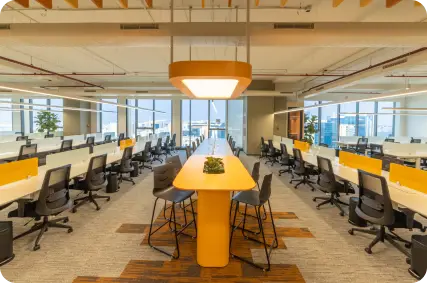
A few variables consistently move the number: location and accessibility, since proximity to metro lines and business hubs commands a premium; team size and scalability, where larger or more flexible commitments can unlock better per-seat rates; amenities and building grade, since Grade A infrastructure costs more but reduces risk; and lease duration and customisation, which affect the final price in opposite directions: longer terms typically lower it, heavier customisation typically raises it.
Managed Offices vs Traditional Offices: Cost Comparison
| Managed Offices | Traditional Offices |
|---|---|
| Lower upfront investment | High capex |
| Faster setup | Long setup timelines |
| Bundled operational costs | Separate vendor management |
| Flexible scaling | Fixed lease commitments |
| Predictable monthly expenses | Variable operational costs |
The pattern across every row is the same: managed offices trade some customisation and long-term ownership for predictability and speed: a trade-off that suits most businesses navigating business expansion flexibility in 2026 better than a rigid, capital-heavy lease.
How Businesses Can Optimise Managed Office Costs
A few decisions make the biggest difference to the final bill. Choose the right office size rather than over-provisioning for headcount that may not materialise. Avoid over-customisation where a standard plug-and-play setup would serve the team just as well. Evaluate bundled services carefully, since not every package includes the same shared office amenities, so a lower headline rate isn’t always the better deal. Select scalable workspace partners who can grow or shrink the footprint without penalty. Where the commitment allows it, negotiate long-term pricing benefits, since many providers offer better per-seat rates in exchange for a longer, stable tenancy.
Conclusion
Understanding a managed office cost breakdown isn’t just about comparing headline rental figures, but it is also about seeing what’s bundled in, what’s billed separately, and what flexibility is worth to a growing business. As hybrid work continues to reshape how much space companies actually need, managed office solutions that combine transparent pricing with genuine scalability are increasingly the sensible choice over a traditional, capital-heavy lease.