





Choosing an office space involves more than comparing monthly rental costs. For growing businesses, the true cost includes fit-out investments, infrastructure requirements, operational responsibilities and the time needed before teams become fully productive. As workplace strategies evolve, businesses are evaluating managed office vs. warm shell spaces based on flexibility, scalability and total cost of ownership.
A warm shell office space may offer flexibility, but it also transfers several setup and operational responsibilities to the tenant. A managed office combines ready infrastructure with ongoing support, helping businesses focus on growth rather than workspace management.
As businesses expand across competitive markets, workplace strategy has evolved from a real estate decision into an operational and growth consideration. Companies today evaluate offices based on speed of deployment, scalability, employee experience and long-term business flexibility.
What Is a Warm Shell Office Space?
A warm shell office space is a partially completed commercial workspace that provides the basic foundation required for a tenant to create their own office environment. Typically, it includes:
- Flooring, painted walls and basic ceiling work
- Provisioned HVAC systems and electrical points
- A ready structure that allows businesses to customise interiors
Furniture, workstations, internet connectivity, IT infrastructure, branding, security arrangements and daily operations must be planned separately, as they remain the tenant’s responsibility. A warm shell can provide greater control over design decisions.
What Is a Managed Office Space?
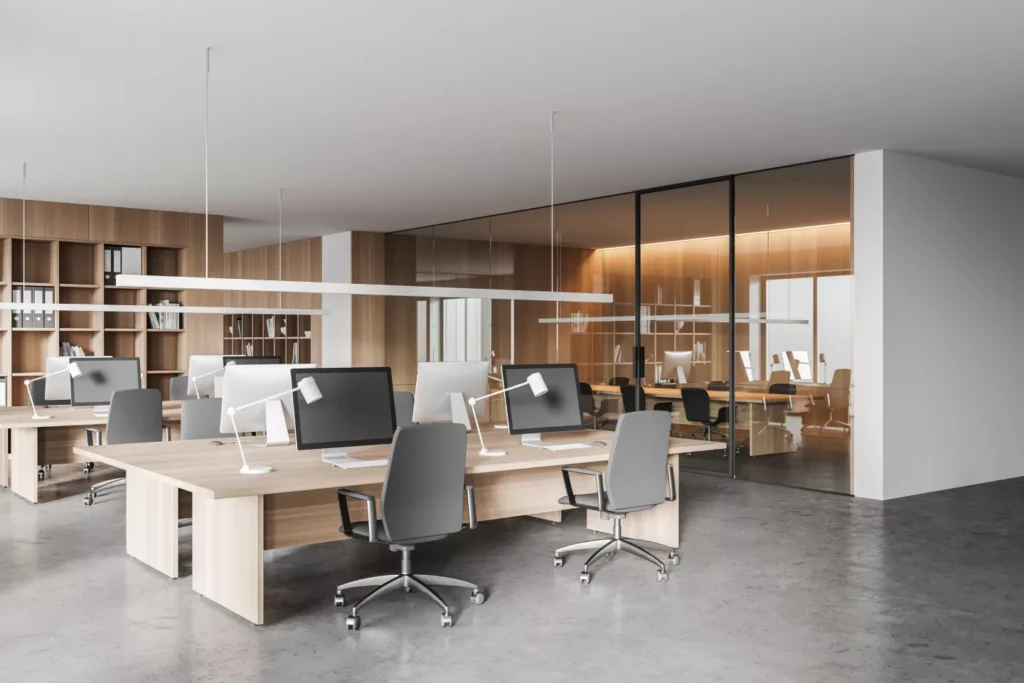
A managed office space for businesses provides a ready-to-use workplace where the major setup and operational requirements are already taken care of. Instead of managing multiple vendors and timelines, businesses can move into an operational workspace designed around their needs.
A managed office typically includes:
- Furniture, workstations and professionally designed interiors
- Internet, IT infrastructure and power backup
- Meeting rooms, housekeeping, security and facility support
With managed office spaces, businesses get a single monthly cost structure instead of coordinating separate payments for multiple services. BuzzWorks provides ready-to-move workplace solutions designed to combine Grade A infrastructure, operational support and flexibility for growing businesses.
Warm Shell vs Managed Office: Key Differences at a Glance
The choice between a warm shell and a managed office depends on how much control, time and operational involvement a business wants to take on.
| Factor | Warm Shell Office | Managed Office |
|---|---|---|
| Setup time | Longer setup period due to fit-outs and installations | Faster move-in with ready infrastructure |
| Upfront investment | Higher initial spending on interiors, furniture and systems | Lower upfront cost with ready facilities |
| Monthly cost | Lower base rent but additional operational expenses | Predictable monthly cost covering workspace requirements |
| Customisation | Greater control over design and layout | Customisation available based on business needs |
| Operations | Managed internally by the tenant | Supported through facility management |
| Scalability | Requires additional planning during expansion | Easier to scale with changing requirements |
| Lease term | More suitable for long-term commitments | Suitable for businesses seeking flexibility |
For businesses evaluating which office space is cost-effective, the answer depends on their growth plans, operational priorities, and investment approach.

The Real Cost of a Warm Shell: Beyond the Rent
The biggest mistake businesses make while evaluating a warm shell is focusing only on the lease amount. The actual office setup costs can include:
- Furniture, workstations and storage solutions
- IT infrastructure, networking and cabling
- Interior design, project management and vendor coordination
- Maintenance contracts and facility management requirements
Apart from direct expenses, delays in construction, vendor coordination or approvals can postpone employee movement and affect productivity. For companies trying to enter a new market or expand quickly, these additional office fit-out costs and operational responsibilities make traditional leasing complex.
The Real Cost of a Managed Office: What Businesses Are Paying For
A managed office combines workspace, infrastructure and operational support into one solution. Businesses pay for a functioning workplace rather than an empty space that requires further investment. The value comes from:
- No separate fit-out bill or interior setup expenses
- No need to build an internal facilities team
- Reduced vendor coordination and maintenance responsibilities
- Predictable operational expenses for easier budgeting
BuzzWorks managed offices are designed as ready-to-move workspaces, offering businesses furnished environments and workplace infrastructure. For businesses focused on speed, efficiency and workplace flexibility, a managed office setup reduces the complexity involved in running a workspace.
Which Businesses Should Choose a Warm Shell?
A warm shell office can be the right choice for businesses that have long-term certainty and the resources to manage a complete office setup. It suits businesses with:
- A confirmed long-term requirement for the same location
- Capital available for upfront fit-outs and infrastructure investment
- Highly specific requirements, such as specialised labs or regulated layouts
For these businesses, investing in a customised workspace may create long-term value. The additional responsibility of managing design, construction and operations may be justified when the workspace needs are unlikely to change.
Which Businesses Should Choose a Managed Office?
A managed office is often better suited for businesses where speed, flexibility and scalability are important priorities. It works well for organisations that are:
- Entering a new city or market and need operational readiness quickly
- Growing teams that may expand or change within 1 to 3 years
- Looking for scalable office spaces without long setup timelines
Managed workspaces can quickly adapt to changing team structures and hybrid work models. They reduce the burden of workspace management while allowing companies to focus on business expansion. For enterprises, startups and growing teams, managed office spaces balance flexibility and efficiency.
Which Is Truly More Cost-Effective?
In the short to medium term, managed offices can offer greater efficiency by reducing upfront investment, shortening setup timelines and simplifying operational responsibilities.
For businesses committed to a long-term presence in a single location, a warm shell may provide better long-term economics if they are prepared to manage fit-outs and ongoing operations.
A managed office provides a lower-risk approach by combining flexibility, infrastructure and predictable costs. It allows companies to invest their resources into growth rather than workspace management.
Conclusion
The decision between a managed office vs. a warm shell is about understanding the complete cost of creating and operating a productive workplace. A warm shell provides control but requires time, investment and ongoing management. A managed office provides speed, flexibility and operational convenience. For businesses prioritising agility and growth, a managed office can offer a more efficient path forward. Businesses exploring flexible workplace solutions can evaluate BuzzWorks to understand how managed infrastructure can support evolving workplace requirements.